Keynote Speakers 2026
Opening Keynote
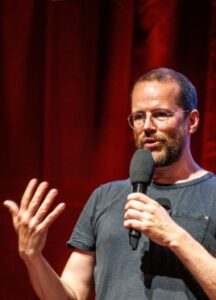
Prof. Martin Dresler
Martin Dresler is head of the Donders Sleep & Memory Lab, and Associate Professor at Radboud University Medical Center. He received training in Biological Psychology, Philosophy and Mathematics at Bochum University, did his PhD at Marburg University and the Max Planck Institute of Psychiatry, and performed postdoctoral research in Oxford and Stanford. He has been active in sleep research for >20 years, with a particular interest in the role of sleep for mental health, biological functions of sleep, cognitive aspects of sleep, and sleep research methodology.
Consciousness during sleep
Conscious experience fluctuates considerably across the day: we cycle from being wide awake over drowsy to sound asleep and back. In this talk, I will explore the mind during sleep, from dreamless sleep and different kind of common dream experiences to the phenomenon of lucid dreaming: rare instances of becoming aware of the current dream state during ongoing sleep.
Afternoon Keynote
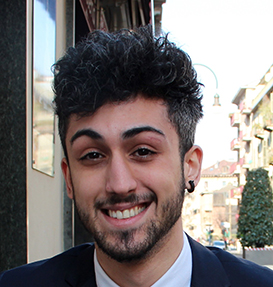
Matteo Panormita
Matteo Panormita is a PhD candidate in Systems Neuroscience, currently conducting his research at Laboratory for Neuro- and Psychophysiology (KU Leuven, Belgium) and at TamiettoLab (University of Turin, Italy). Born and raised in Italy, he holds a BSc in Psychology and an MSc in Neuroscience from the University of Turin. His doctoral work, supervised by Professors Wim Vanduffel and Marco Tamietto, explores the neural mechanisms of V1-independent mechanisms in NHP.
Seeing Without Knowing, Acting Without Seeing: Neural and Visuo-Motor Reorganization After V1 Loss
After damage to the primary visual cortex (V1), patients experience clinical blindness in the corresponding part of the visual field. Nevertheless, several visuo-motor functions can persist—a phenomenon known as “blindsight”—due to the functionality of multiple V1-independent pathways. My research investigates the neural mechanisms sustaining this residual vision by bridging the gap between human and comparative neuroimaging, focusing on the complex interplay between large-scale cortical reorganization and early behavioral adaptations. By employing comprehensive longitudinal fMRI and computational analyses, I explore how extensive cortical networks—extending from early visual areas to high-level association cortex—recalibrate following V1 damage, investigating the extent to which alternative subcortical routes like the collicular-pulvinar pathways can sustain information processing.
Beyond neural mapping, my work characterizes the emergence of compensatory visuomotor behaviors in the immediate aftermath of cortical damage, a period often overlooked in favor of steady-state observations. Through detailed oculomotor perimetry and temporal cueing, I document how residual capabilities for target localization and saccadic guidance evolve shortly after a lesion, providing new insights into the potential for early-stage brain plasticity and predictors. By integrating fMRI with refined behavioral and oculomotor datasets, we aim to combine basic and translational research to unravel the recurrent network dynamics underlying visual awareness and to exploit the brain’s inherent plasticity for the amelioration of cortical blindness.
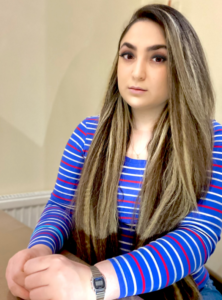
Fatemeh Seyfzadeh
I hold a Master’s degree in Psychology and am currently a PhD fellow in Medical Sciences at the Coma Science Group at the University of Liège in Belgium. My research focuses on neural mechanisms underlying the loss and recovery of consciousness, as well as on pharmacological and non-pharmacological approaches that may modulate consciousness in severely brain-injured patients with disorders of consciousness. I am currently leading a pharmacological randomised controlled trial investigating the effects of zolpidem, with the aim of identifying treatment responsiveness markers across different post-coma states. This work integrates neurobehavioural and neurophysiological assessment techniques to characterise potential mechanisms of paradoxical recovery-enhancing effects of zolpidem in patients with disorders of consciousness and provide a better understanding of its relevance in clinical management of this patient population.
Let’s Shed Light on Disorders of Consciousness!
Darkness, in its simplest sense, might be perceived as absence, yet in disorders of consciousness, it may be less about true emptiness and more about a hidden or fragmented presence. Patients with disorders of consciousness live in a state that might appear dark and unknown to us; often silent, sometimes unresponsive, and seemingly disconnected. Beyond this quiet surface, however, there might be subtle signs of presence and awareness that escape our usual means of perception and detection. Researchers and clinicians have, thus, sought to better understand different states of consciousness, how they can be identified, and ultimately how they might evolve spontaneously or though neuromodulation. In this talk, I will broadly explore how we assess, prognosticate, and attempt to potentially promote recovery of consciousness in severely brain-injured patients with disorders of consciousness. For a better contextualization of translational research in this respect, I will wrap up the talk with an ongoing pharmacological randomized controlled trial at the Coma Science Group on zolpidem, a sleeping pill that can paradoxically restore presence in some patients, not by adding light, but by promoting recovery or emergence of responsiveness and perhaps consciousness itself.