Experience Labs
Read more about the thrilling experience labs from Synapsium 2026!
Neuroanatomy
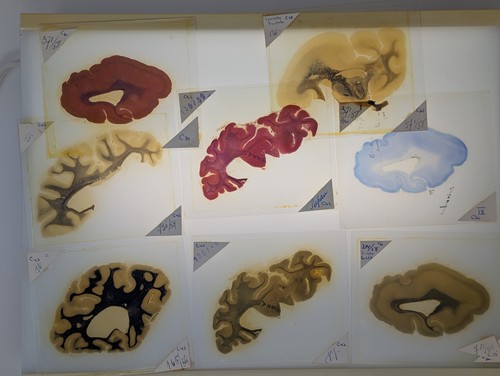
In this experience lab you’ll have the opportunity to explore our own neuroanatomy as well as those from other species. Come and see what makes some brains different and what remains largely the same. How good are your 3D spatial orientation skills? Can you successfully use a neuroanatomical atlas to find where you are in the rat brain? Or can you recognize where you are in the human brain from MRI scans? A final part of this experience lab will help you to get intimately connected with the picture of the brain you create in your head. How well does the picture in your head match the real life thing?
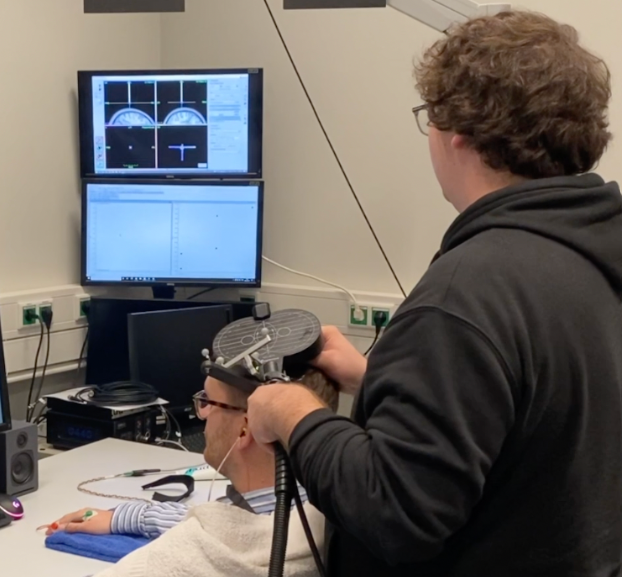
Transcranial Ultrasonic Stimulation
Host: Marwan Engels, PhD Candidate
VisualizeR: Experience the zebrafish brain in Virtual Reality
Host: Utku Ortal, PhD Student
Immerse yourself in virtual fish brains! Fishualizer3D is a software that visualizes functional 3D zebrafish brain data in an interactive way in a virtual environment utilizing VR headset devices. It is the VR iteration of the previous web based program. While still being in development, Fishualizer3D has a number of features already that help you experience how a (larval) zebrafish experiences the world internally!
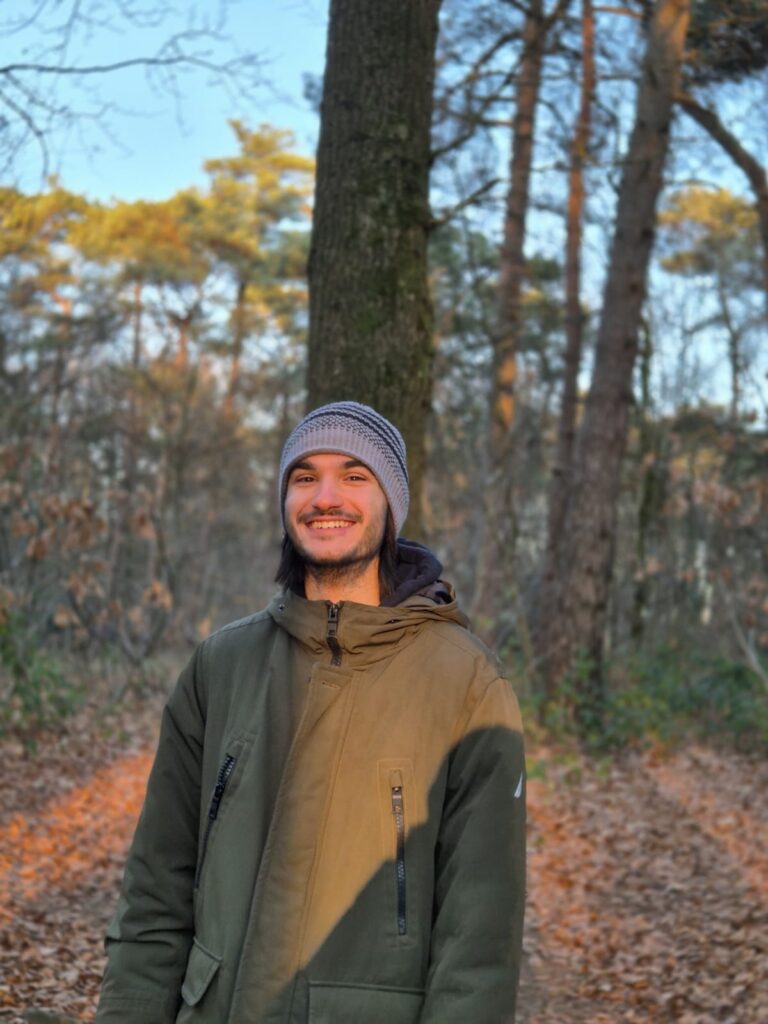
Hi! I’m Utku, and I will be hosting this experience lab. I’m an alumni of the Cognitive Neuroscience Master’s in Radboud University focusing on computational neuroscience and modelling. My interest lies in uncovering and modelling a wide range of neural systems. This May, I will be starting my PhD in continual learning and modelling representational drift in Groningen.
Tehuti Brain Scanner and MSI
Host: Michel Reij, Visual Artist
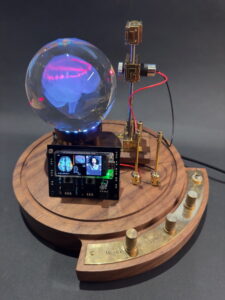
The Tehuti Brain Scanner is an educational model showing the slice-by-slice process of mapping a brain. Centered around a crystal ball with a human brain etched into it, the wood and brass parts combine with modern electronics to create a unique experience. Not only does it scan the brain from top to bottom, it also illustrates various kinds of research and diagnostics. This is a machine that Franciscus Donders himself might have used!
MSI
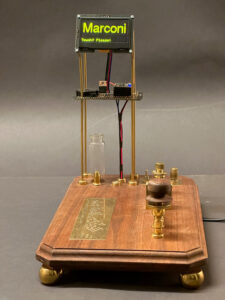
The Marconi Subconscious Interpreter is a two-part machine to capture the continuous train of thought that is often impossible to record. Using a classical mode of communication known as “Morse code”, a participant is given the arduous task of guiding a bird through an intricate maze. While distracted, the second part of the installation receives the Morse code produced and translates it back to ASCII text.
About Michel Reij:
Michel Reij is a Dutch visual artist who combines classical skills like wood working and metal turning with modern technologies such as microcontrollers and electronics to create one-of-a-kind ‘machines’. He graduated as a cognitive psychologist in 1994, when the tools employed today at the Donders Institute were still in the realm of science fiction. He has a daughter who’s currently mastering at Donders. For more information: michelreij.nl